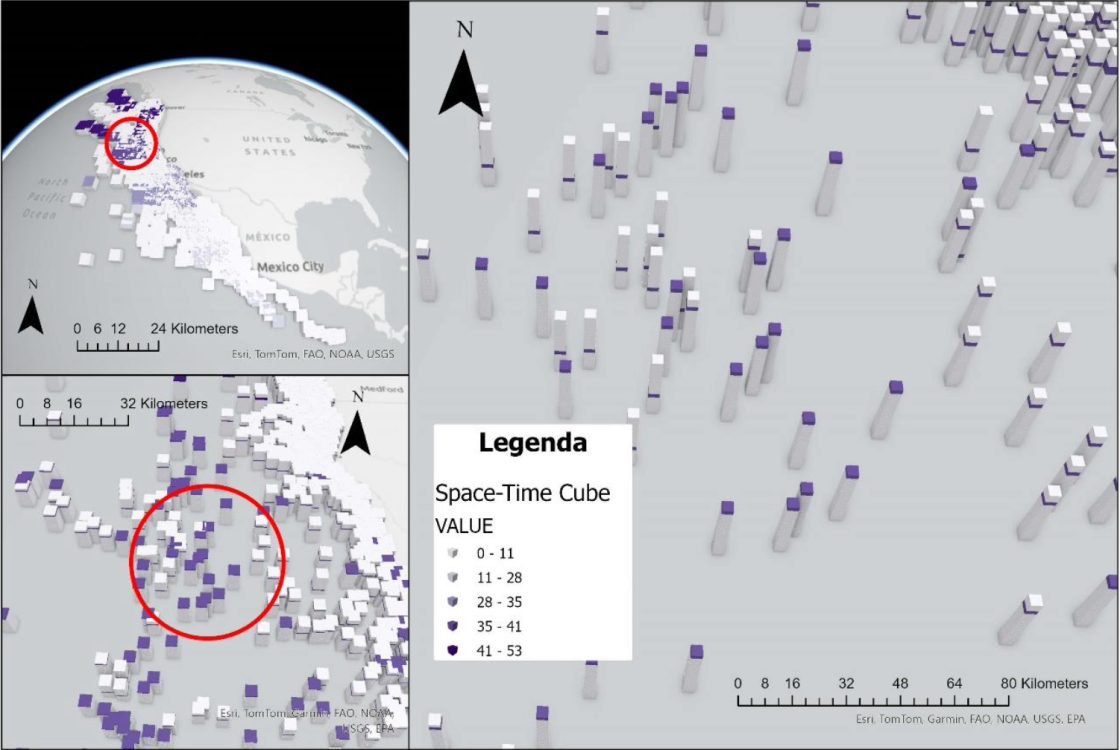
Blue whales are highly dependent on cold, nutrient-rich waters for feeding. With melting ice sheets and rising sea temperatures along the Alaskan coast, these conditions are shifting further north. This raises a critical question: how does climate change affect the migration of the largest animal on earth?
GeoIQ Partners analyzed 20 years of blue whale tracking data, covering seasonal movements from Latin America to Alaska. By linking satellite-based whale observations with ocean temperature datasets, we identified clear patterns in how feeding grounds are moving northwards and how this alters migration distances.

 view
view
 view
view